News
Reps to tighten alcohol regulation, seek national control framework

The House of Representatives has commenced moves to establish a comprehensive national framework for the control and regulation of alcohol consumption in Nigeria, in what lawmakers described as a major step toward addressing the growing social and public health consequences of substance abuse across the country.
The proposed legislation, titled “A Bill for an Act to Provide for the Control, Regulation and Reduction of Alcohol-Related Harm in Nigeria,” is sponsored by the Chairman of the House Adhoc Committee on Drug Trafficking, Tobacco and Alcohol Abuse, Mr Oluwatimehin Adelegbe.
The bill, which has already passed first reading, seeks to regulate the production, importation, distribution, advertisement, marketing and consumption of alcoholic beverages in Nigeria, while introducing stronger safeguards for minors and vulnerable groups.
Speaking in Abuja on Thursday, Adelegbe said the proposed law was designed to address rising concerns over alcohol abuse and its impact on public health, security, road safety, domestic violence and youth development.
“This bill is not about prohibition—it is about protection, responsibility, and national development. Nigeria must adopt a modern, evidence-based framework that safeguards our youth while ensuring accountability within the alcohol industry,” he said.
The lawmaker explained that the proposed legislation followed extensive consultations with relevant stakeholders, including government agencies, public health experts, civil society groups and industry operators.
According to him, the bill is intended to strike a balance between public health concerns and the legitimate interests of manufacturers and distributors operating within the alcohol industry.
Adelegbe disclosed that a key technical input into the proposed law came from A New Thing International Foundation, led by Ambassador Kenneth Anetor, who also serves as Lead Consultant to the House Committee on Drug Trafficking, Tobacco and Alcohol Abuse.
Quoting Anetor, the lawmaker said, “This legislation represents a shift from reactive interventions to preventive systems. It aligns Nigeria with global best practices while creating a balanced framework that protects public health and allows responsible industry participation.”
If passed into law, the bill will establish a national alcohol control framework, introduce stricter regulations on alcohol marketing and access—particularly for underage persons—strengthen public awareness campaigns and harm-reduction strategies, improve data collection and enforcement mechanisms, and align Nigeria’s alcohol policies with international public health standards.
Adelegbe also called on stakeholders in the alcoholic beverage industry to participate actively in the legislative process as the bill progresses through committee stages and public hearings.
According to him, the engagement of industry players is necessary to ensure that the eventual legal framework is both effective and sustainable.
“The process of the bill is a unique opportunity for industry leaders to contribute to shaping balanced and sustainable regulations, demonstrate commitment to corporate responsibility and partner with government on harm reduction and consumer protection,” he said.
The move by the House comes amid growing concern among health professionals, law enforcement agencies and advocacy groups over the increasing rate of substance and alcohol abuse in Nigeria, particularly among young people.
In recent years, stakeholders have repeatedly called for a coordinated national policy to regulate alcohol consumption, warning that the absence of a comprehensive legal framework has contributed to unchecked advertising, easy access by minors and weak enforcement of existing regulations.
Nigeria currently relies on a combination of fragmented laws, agency guidelines and state-level regulations to manage alcohol-related issues, unlike many countries that operate dedicated national alcohol control policies.
Public health experts have argued that the country’s rising cases of addiction, drunk driving, violent crimes and mental health disorders linked to substance abuse require a more structured and preventive approach.
The debate around alcohol regulation has also gained momentum alongside increased attention on drug abuse, especially following repeated warnings by the National Drug Law Enforcement Agency over the growing prevalence of substance dependence among youths.
Stakeholders believe the proposed legislation could become one of the most far-reaching public health reforms in recent years if eventually passed and implemented effectively.















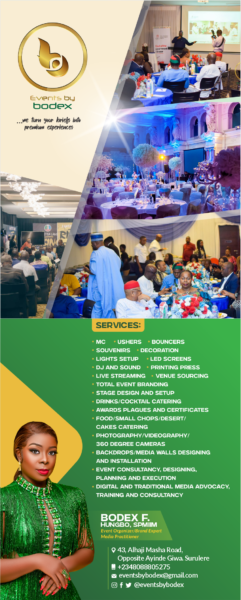



Bodex F. Hungbo, SPMIIM is a multiple award-winning Nigerian Digital Media Practitioner, Digital Strategist, PR consultant, Brand and Event Expert, Tv Presenter, Tier-A Blogger/Influencer, and a top cobbler in Nigeria.
She has widespread experiences across different professions and skills, which includes experiences in; Marketing, Media, Broadcasting, Brand and Event Management, Administration and Management with prior stints at MTN, NAPIMS-NNPC, GLOBAL FLEET OIL AND GAS, LTV, Silverbird and a host of others