News
Texas becomes first US state to require students read the Bible with required literary list

The Texas State Board of Education has approved new public school standards that integrate biblical teachings into classroom instruction, making Christianity a central component of education for the state’s 5.5 million public school students.
Following months of heated debate, the Republican-controlled board voted 9-5 on Friday to adopt a mandatory reading list for every grade level before approving revised social studies standards for kindergarten through eighth grade. The new curriculum embeds biblical concepts and figures and is regarded as one of the most far-reaching efforts in the United States to require the teaching of Christianity in public schools. The standards, which will shape textbooks and statewide examinations, are expected to be introduced in phases beginning with elementary schools in the 2030-2031 academic year.
Supporters said the changes are intended to promote Judeo-Christian values and provide students with a stronger understanding of American history and moral principles. The curriculum includes required lessons on biblical figures such as Jesus, Abraham and Moses.
“We are bringing the Bible back into schools this week for the first time in 60 years,” State Board of Education member Brandon Hall, a Republican representing Aledo, said during a prayer session outside the hearing. Not all Republican board members supported the move. Evelyn Brooks of Frisco voted against the required reading list, arguing that it would reduce teachers’ autonomy in selecting classroom materials.
Critics, however, said the new standards present history and literature through a predominantly Christian perspective while reducing attention given to racial, cultural and religious diversity. They also argued that the changes could violate the constitutional principle separating church and state.
“Texas is telling millions of children that one religion deserves the government’s seal of approval, while everyone else is an afterthought,” said Annie Laurie Gaylor, president of the Freedom From Religion Foundation. “That’s government-sponsored religious favoritism – and the First Amendment strictly forbids it.”
Concerns were also raised by Jewish and Muslim advocacy groups over how their faiths are portrayed in the revised curriculum. Jewish leaders warned that the pairing of certain biblical texts with Holocaust lessons could foster antisemitism in classrooms.
Muslim advocates also criticised the curriculum for linking Islam primarily with violence. The standards require students to study topics including the “Muslim invasion” of Christian territories during the Crusades and the role of “jihad” in 21st-century terrorism, while omitting significant Muslim contributions to science and mathematics.
“You have tied Muslim history to warfare, piracy and radicalism, then voted on purpose to strip out the algebra and astronomy contributions Muslims have made,” said Amina Ishaq of the Fort Bend Coalition for Justice. “You have decided which children inherit greatness and which only inherit suspicion.”
The curriculum overhaul follows a series of recent measures by Texas lawmakers to expand the role of religion in public education, including legislation requiring the Ten Commandments to be displayed in every classroom and the introduction of state-developed, Bible-infused “Bluebonnet” instructional materials. Unlike the optional Bluebonnet textbooks, however, the newly approved standards will be mandatory for all Texas public schools, including charter schools.
Texas also becomes the only U.S. state to prescribe its own statewide literature reading requirements instead of allowing school districts or teachers to determine reading lists. Depending on grade level, students will be required to study up to 30 prescribed texts, including approximately a dozen passages from the Bible. Lessons will range from the story of David and Goliath in second grade to the Book of Job in tenth grade. Many educators opposed the new reading requirements, arguing that the prescribed list is too extensive to be completed within a single school year.









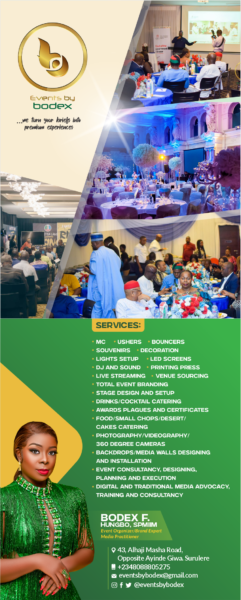
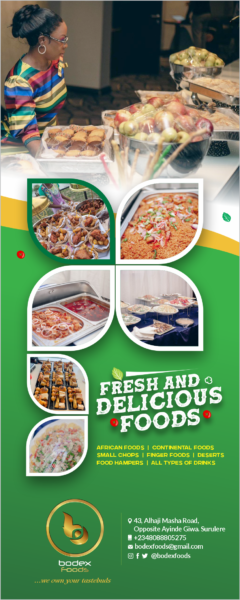

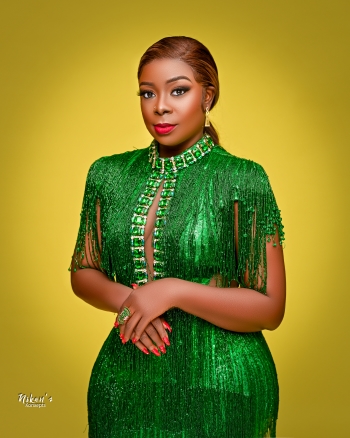
Bodex F. Hungbo, SPMIIM is a multiple award-winning Nigerian Digital Media Practitioner, Digital Strategist, PR consultant, Brand and Event Expert, Tv Presenter, Tier-A Blogger/Influencer, and a top cobbler in Nigeria.
She has widespread experiences across different professions and skills, which includes experiences in; Marketing, Media, Broadcasting, Brand and Event Management, Administration and Management with prior stints at MTN, NAPIMS-NNPC, GLOBAL FLEET OIL AND GAS, LTV, Silverbird and a host of others

Bodex Media Announces December 10 for BSMH 7.0 as 3,000 Students from 20 Institutions Set to Gather at UNILAG

Former Premier League goalkeeper Shay Given marries Rebecca Gibson at Westminster Abbey