News
NAFDAC shuts down counterfeit alcohol factory in Abuja

The National Agency for Food and Drug Administration and Control (NAFDAC) recently intensified its campaign against counterfeit alcohol, dismantling an illicit production operation in Lugbe, Abuja.
This raid uncovered large quantities of fake alcoholic beverages and expired ingredients with altered dates, underscoring NAFDAC’s commitment to clamping down on dangerous, substandard goods.
In an operation led by Mr. Shaba Mohammed, Director of NAFDAC’s Federal Task Force, enforcement teams seized counterfeit alcohol and discovered equipment used to repackage these products in reused bottles.
“This operation is part of a broader effort to target hotspots for counterfeit goods,” said Mohammed. “Lugbe has become a focal point for producing and distributing these fake alcoholic products, with bottles labeled to mimic popular brands and expiration dates altered to deceive consumers.”
The confiscated products had been packaged in residential settings, where counterfeiters relied on imitation packaging materials to produce fraudulent versions of popular alcoholic drinks.
In light of this, NAFDAC has now sealed the facility and launched investigations into those involved.
Mohammed emphasized that this crackdown marks one of many enforcement actions the agency has planned in Abuja to curb the circulation of substandard alcoholic beverages, especially as the festive season approaches, when demand traditionally increases.
The crackdown in Abuja mirrors other enforcement actions nationwide, as NAFDAC continues to monitor markets and address the surge in unregistered and counterfeit products. Mr. Tamanuwa Andrew, Deputy Director of NAFDAC’s Investigation and Enforcement in Kaduna, reported similar discoveries in Wuse Market and Mararaba, a bustling community on the border of the Federal Capital Territory (FCT) and Nasarawa State.
“We’ve seen an increase in unregistered herbal remedies and pharmaceutical products alongside counterfeit alcohol,” said Andrew. “Our surveillance is ongoing, with the aim of clearing these products from the markets and protecting public health.”



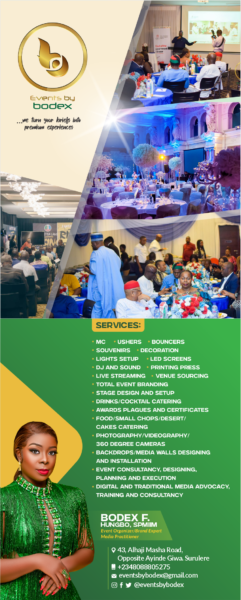


Bodex F. Hungbo, SPMIIM is a multiple award-winning Nigerian Digital Media Practitioner, Digital Strategist, PR consultant, Brand and Event Expert, Tv Presenter, Tier-A Blogger/Influencer, and a top cobbler in Nigeria.
She has widespread experiences across different professions and skills, which includes experiences in; Marketing, Media, Broadcasting, Brand and Event Management, Administration and Management with prior stints at MTN, NAPIMS-NNPC, GLOBAL FLEET OIL AND GAS, LTV, Silverbird and a host of others

Check Out The Latest Edition of The ELITES

U.S. revokes over 100,000 visas, including thousands of student permits